


ZeroGPT Review: AI Detector and Humanizer 30-Test Study
For this ZeroGPT review, we tested 30 writing samples across ZeroGPT, Humaniser.ai, Originality.ai, GPTZero, Copyleaks, and Winston AI. The set included human writing, raw AI writing, ZeroGPT-humanized text, and Humaniser.ai-humanized text.
Updated: Jun 23, 2026
Maya Sterling
For this ZeroGPT review, we tested 30 writing samples across ZeroGPT, Humaniser.ai, Originality.ai, GPTZero, Copyleaks, and Winston AI. The set included human writing, raw AI writing, ZeroGPT-humanized text, and Humaniser.ai-humanized text. We didn’t intend to declare a villain. Rather, we aimed to see how the same texts behaved under the same rules.
ZeroGPT is best known as an AI detector, but the AI humanizer ZeroGPT feature matters, too, because users do not only want a score. They want to know whether flagged text can be rewritten without losing meaning, clarity, or flow.
What ZeroGPT Does
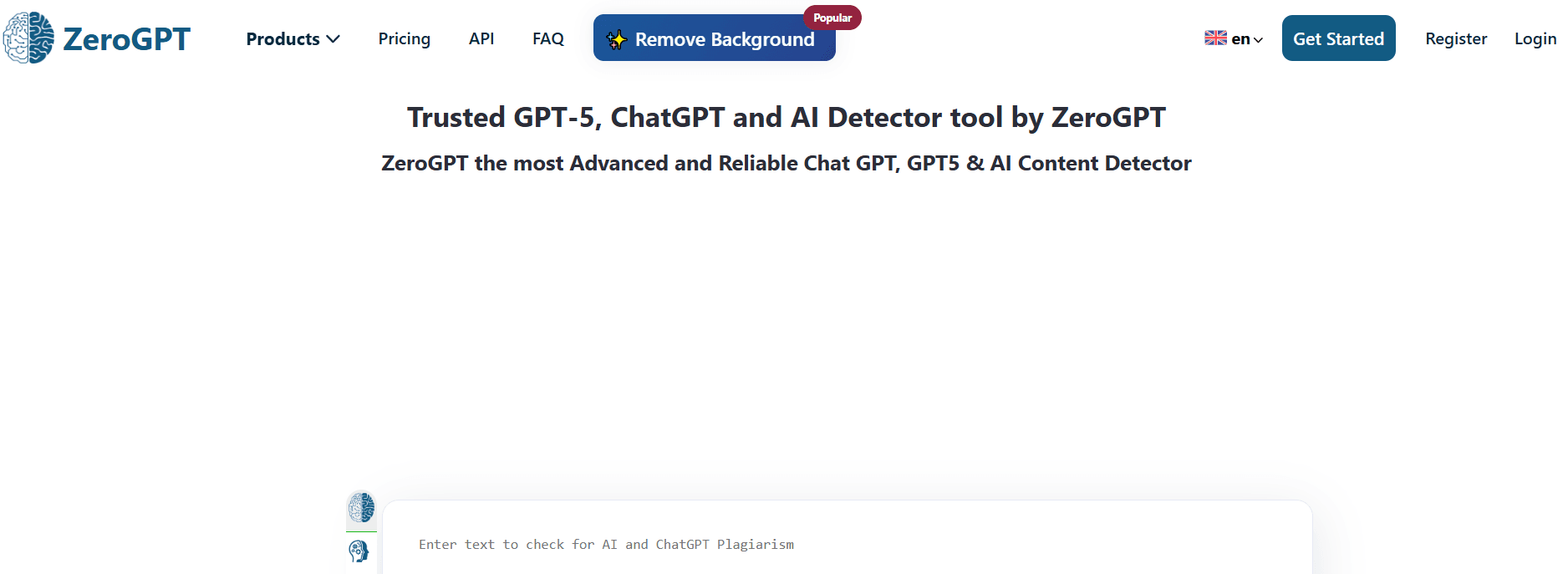
ZeroGPT is best known as an AI detector. You paste text, run the scan, and get a score that estimates whether the writing looks human-made or AI-generated. The platform also offers rewriting features, including a humanizer, so it sits closer to a full writing-check workflow.
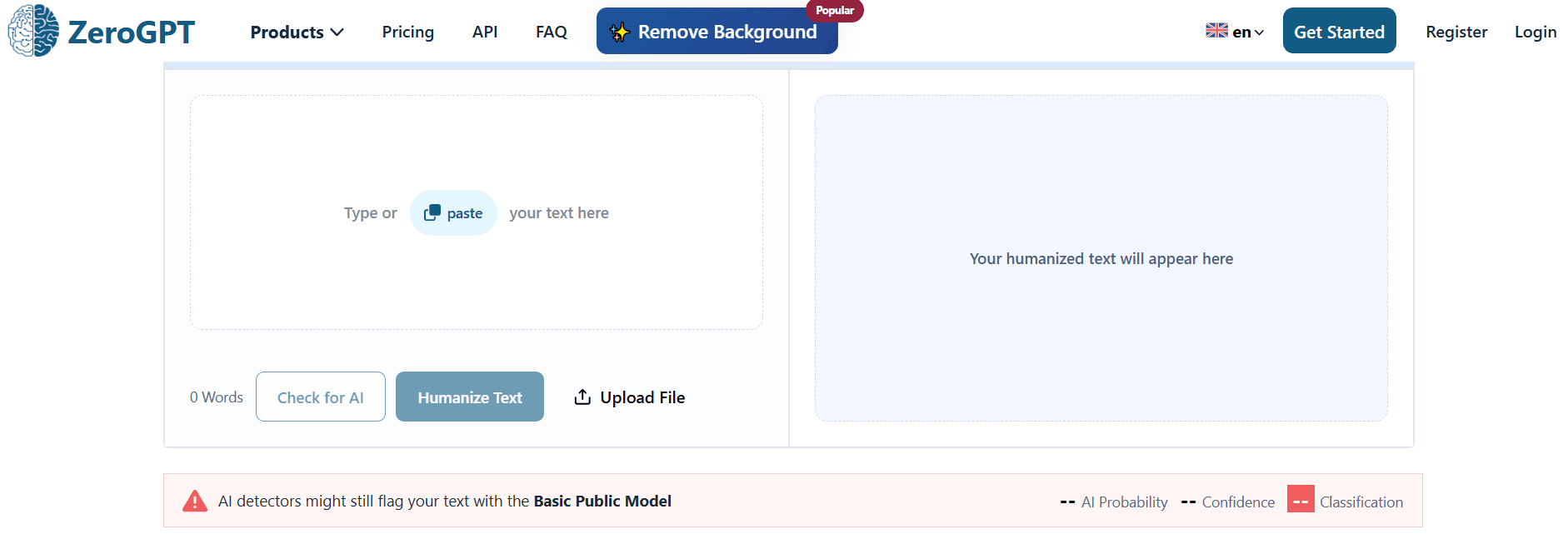
That makes the AI Humanizer ZeroGPT workflow interesting to test. A detector can warn you that a draft looks suspicious. A humanizer claims to help with the next step. The question is whether the rewritten version becomes clearer and more natural, or only more different.
ZeroGPT Humanizer Free Test Setup and Limits
For the humanizer part, we used five raw AI samples from the main test set. Each sample was rewritten once with ZeroGPT and once with Humaniser.ai. Then we checked both rewritten versions across the detector set.
We did not treat a lower AI score as automatic success. A rewrite also had to preserve meaning and remain readable. A text that “passes” detection but sounds mangled is not a win.
ZeroGPT AI Content Detector Review Method
The test included 30 samples: ten human-written texts, ten raw AI texts, five ZeroGPT-humanized AI texts, and five Humaniser.ai-humanized AI texts. The samples covered blog paragraphs, academic-style writing, product copy, business emails, and how-to content.
Each sample was tested in ZeroGPT, Humaniser.ai, Originality.ai, GPTZero, Copyleaks, and Winston AI. When a tool gave an AI percentage, 50% or higher counted as flagged. This test shows observed results from one sample set.
ZeroGPT Accuracy Review: What We Found
ZeroGPT landed in the middle of the pack. It passed 70% of human samples and detected 70% of raw AI samples. That makes it useful for quick screening, but not strict enough to treat as final proof (tools are only tools, after all).
Test category | ZeroGPT result |
|---|---|
Human samples passed | 70% |
Raw AI detected | 70% |
False positives | 30% |
False negatives | 30% |
ZeroGPT-humanized text still flagged | 40% |
Humaniser.ai-humanized text still flagged | 20% |
Where the Results Got Messy
False positives were the main trust problem. ZeroGPT flagged 30% of human-written samples as AI. Originality.ai and Winston AI were stricter in this test, with 40% false positives each. GPTZero and Humaniser.ai were gentler, both at 20%.
False negatives also appeared. ZeroGPT missed 30% of raw AI samples, while Humaniser.ai, Copyleaks, and Winston AI missed only 10%. That does not make any tool “bad.” It shows why detector scores need context. A polished human paragraph and a lightly edited AI paragraph can become uncomfortably close together.
AI Humanizer ZeroGPT Results After Rewriting
The humanizer test gave a clearer difference. ZeroGPT reduced the average AI score from 73.5% to 37%, a 36.5-point drop. Humaniser.ai reduced the average from 86% to 23%, a 63-point drop.
Humanizer | Avg AI score before | Avg AI score after | Avg score drop | Meaning preserved | Readability |
|---|---|---|---|---|---|
ZeroGPT | 73.5% | 37% | −36.5 points | 5/5 | 5/5 |
Humaniser.ai | 86% | 23% | −63 points | 5/5 | 5/5 |
Both rewrites stayed readable and kept the original meaning. Humaniser.ai lowered AI scores more sharply in this small test. ZeroGPT still improved the scores, but less aggressively.
Results by Content Type in Our Test
The results were not evenly spread. Blog and how-to samples were easier for most tools to classify because raw AI often used familiar patterns: neat topic sentences, balanced phrasing, and advice that lacked specificity.
Academic-style writing caused more friction. Some human samples sounded formal enough to trigger flags. Business emails were also tricky because short, polite, structured writing can look machine-made even when a person wrote it. Product copy sat somewhere in the middle. Generic promotional language looked suspicious, while specific benefit-led copy performed better.
The same detector may feel reliable on one content type and shaky on another.
ZeroGPT Review: How It Compared With Other Tools
Here is the main comparison from the 30-sample test.
Tool | Human samples passed | Raw AI detected | False positives | False negatives | ZeroGPT- humanized text flagged | Humaniser.ai-humanized text flagged |
|---|---|---|---|---|---|---|
ZeroGPT | 70% | 70% | 30% | 30% | 40% | 20% |
Humaniser.ai | 80% | 90% | 20% | 10% | 60% | 40% |
Originality.ai | 60% | 80% | 40% | 20% | 80% | 80% |
GPTZero | 80% | 80% | 20% | 20% | 60% | 40% |
Copyleaks | 70% | 90% | 30% | 10% | 80% | 40% |
Winston AI | 60% | 90% | 40% | 10% | 60% | 20% |
Humaniser.ai, Copyleaks, and Winston AI detected the most raw AI at 90%. GPTZero and Humaniser.ai had the lowest false positive rates at 20%. Originality.ai and Copyleaks were tougher on humanized AI, flagging 80% of ZeroGPT-humanized samples.
What the Detector Comparison Means in Practice
We believe this ZeroGPT AI content detector review should not end with “the score was X, so trust it.” The useful lesson is that tools disagree. One detector may pass a text, while another flags it hard. That means each system reads patterns differently.
For students, a detector result should never be treated as proof of misconduct by itself. For SEO teams and agencies, these tools are better as screening layers. They can point to drafts that need closer review, but they cannot judge source quality, factual accuracy, or brand voice. Use the score, then read the text.
Can a Free Humanizer Lower AI Scores?
Yes, but the result depends on the tool and the detector used afterward. In this test, the ZeroGPT humanizer free workflow reduced average AI scores by 36.5 points. That is a noticeable drop, but several detectors still flagged parts of the rewritten text.
Humaniser.ai lowered scores more in the five-sample humanizer test. Still, the best rewrite is not the one with the lowest score. It is the one that keeps the point, improves flow, and does not make the writer sound like they swallowed a thesaurus.
AI Humanizer ZeroGPT vs Humaniser.ai
Humaniser.ai had the stronger score drop in this test, while both tools preserved meaning and readability across all five rewritten samples. That gives Humaniser.ai an edge if the only goal is reducing AI scores.
But score reduction is not the whole job. ZeroGPT’s rewrites were still usable and readable. The better choice depends on the workflow: quick cleanup, detector comparison, or deeper editing. A humanizer can smooth a draft, but it cannot add missing research, lived detail, or a sharper argument.
Final Verdict From the 30-Sample Test
ZeroGPT is useful, but moderate. It caught 70% of raw AI and passed 70% of human samples in this test. That makes it a practical, quick checker.
Its humanizer improved scores and preserved readability, but Humaniser.ai lowered scores more sharply. Compared with other tools, ZeroGPT was less strict than Humaniser.ai, Copyleaks, and Winston AI on raw AI detection.
Use ZeroGPT as a warning light. Then inspect the text, fix weak sections, and make the final call yourself.
FAQs
Does ZeroGPT really work?
Yes, but within limits. In this test, ZeroGPT detected 70% of raw AI samples and passed 70% of human samples. That is useful for quick checks, but not strong enough to treat as proof.
Is ZeroGPT as good as Turnitin?
We did not include Turnitin in the live test because official access is usually institution-based. Turnitin also serves a different academic workflow. ZeroGPT is easier to access, but it should not replace institutional review.
Is ZeroGPT better than Originality AI?
It depends on the metric. ZeroGPT had fewer false positives than Originality.ai in this test: 30% versus 40%. Originality.ai detected more raw AI and flagged more humanized AI samples.
Can ZeroGPT detect humanized AI text?
Sometimes. ZeroGPT flagged 40% of ZeroGPT-humanized samples and 20% of Humaniser.ai-humanized samples. That means humanizing lowered detection risk in this set, but it did not make the results predictable.
What are the limitations of ZeroGPT?
The main limits are false positives, false negatives, short-text instability, and tool disagreement. Formal human writing can be flagged. Lightly edited AI can pass. The score needs human review.
Which tool performed best in this test?
There was no single winner for every use case. Humaniser.ai, Copyleaks, and Winston AI led raw AI detection. GPTZero and Humaniser.ai had lower false positives. Humaniser.ai had a bigger humanizer score drop.
Related posts


